What to wear on an orca safari
The air near Tromsø in winter is only a few degrees below freezing, but you spend hours standing still on a moving boat in the wind. Dress for that and the day is comfortable. Below is the kit that works layer by layer, followed by what each tour lends you so you do not pack twice.
The cold you are dressing for
Tromsø sits on an island about 350 km (220 miles) north of the Arctic Circle, yet its winter days are milder than that latitude suggests.
From November to January the daytime temperature usually hovers around −2 to −4 °C (25–28 °F), and the sea itself does not freeze. On land that is a brisk walk. On a boat it is different, because the boat makes its own wind and an open deck at speed adds spray. An hour at the rail while a pod circles feels far colder than the thermometer says.
The light shapes the day too. In the polar night the sun stays below the horizon from about late November to mid-January, leaving a few hours of twilight around midday.
Both ends of the trip happen in darkness. Piers can be icy and steps slippery, and there is no sun to warm your face. The best time to see orcas near Tromsø explains how the light changes across the season.
Layers from the skin out
Several thin layers beat one heavy coat, because you will move between a heated lounge and the deck all day and need to shed or add clothes without fuss.
- Base layer of long johns plus a merino wool top (cotton holds sweat and then chills you)
- Mid layer of fleece or a thick wool sweater
- Insulation from a down jacket or a ski jacket
- Outer shell of a windproof jacket and ski or shell trousers, ideally waterproof against spray
If your tour hands out a suit, the shell matters less. The base and mid layers still do the work underneath. Leave jeans at the hotel unless you wear long johns under them and something windproof on top.
Keeping the edges warm
Most of the cold gets in at the edges. Wear a hat that fully covers your ears. A scarf or a neck gaiter helps against the wind on the open deck.
Bring two pairs of gloves, a thin pair for working a camera or phone and a thick pair or mittens to pull over them between sightings.
Feet suffer most when you stand still. Wear warm winter boots whose soles grip on ice, and wool socks.
Carry a spare pair of socks in your bag in case spray or snow gets in. The walk down a frozen pier in the dark is the first test of those soles, long before you see a fin.
What each tour lends you
The six trips differ a lot in what they provide, so check this before you buy a new jacket.
| Tour | Suit provided | Warm place to retreat | From |
|---|---|---|---|
| Polar Adventures | Thermal suit | Heated boat with open decks | ~$269 |
| Brim Explorer | Nothing to borrow | Heated saloons with panoramic windows | ~$224 |
| Rødne Fjord Cruise | Nothing to borrow | Warm lounge | ~$225 |
| Arctic Adventure Tours (RIB) | Flotation suit, boots, goggles, mittens, life vest | None on the open RIB | ~$344 |
| Skua Nature | No special suit needed | Covered, heated boat | ~$353 |
On Brim and Rødne you dress yourself for the deck, and the lounge is where you warm up between sightings. On Polar Adventures' all-inclusive day, from ~$269, the thermal suit goes over your own layers, so a slim mid layer fits better than a bulky coat. Skua Nature's covered boat, from ~$353, keeps you out of the wind, so ordinary warm winter clothes are enough. Our comparison of the boats goes beyond the clothing.
Dressing for the RIB
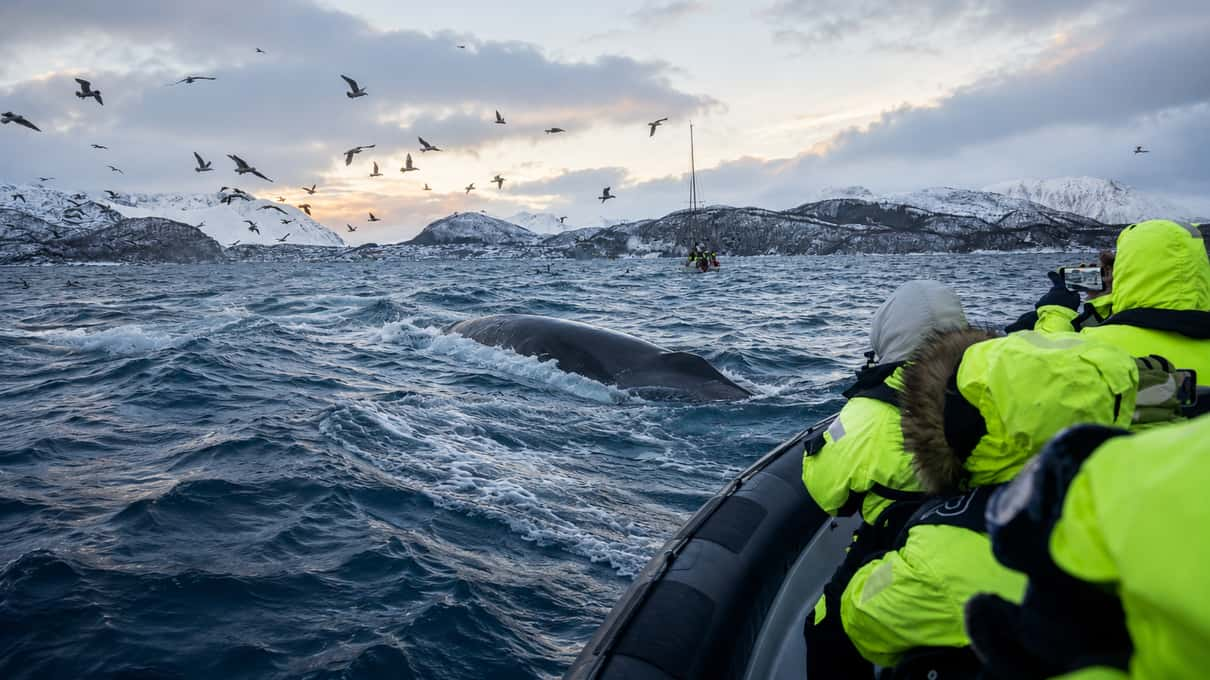
The RIB day is the coldest way to watch orcas from Tromsø, and also the one that kits you out most fully. Arctic Adventure Tours hands out the full set (thermal flotation suit, boots, goggles, mittens, life vest).
The suit blocks the wind, but you still sit in an open boat at speed for about 3 hours, with spray coming over the bow. Wear a full base and mid layer underneath, thin gloves inside the mittens, and a hat that fits under the hood. The bus leaves Scandic Ishavshotel at 05:00 sharp, so lay everything out the night before.
The open-boat day with the full kit
Arctic Adventure Tours runs a 12-hour day by bus to Skjervøy with about 3 hours on a RIB, from ~$344. The kit (flotation suit, boots, goggles, mittens) is provided, as is a hot drink with a light sandwich afterward. Not for under-14s; free cancellation up to 24 hours ahead.
Cameras and batteries in the cold
Cold drains batteries fast. A phone that shows plenty of charge at the pier can shut down at the rail the moment a pod surfaces.
Keep it in an inside pocket against your body and carry a power bank with a cable. Take it out only when you need it. Polar's boat has USB charging, and so does the Skua bus.
On the RIB, cameras come along at your own risk, so a waterproof bag helps. When you come in from the cold, leave the camera in its bag for a while so condensation does not form on the lens.
A camera matters less than you might think in the low winter light. Many guests come home happier with a few sharp memories than with a hundred blurred frames, and our page on how the whales feed tells you what to watch for.
Seasickness and the small extras
Rødne Fjord Cruise's own list of what to bring makes a good checklist for any boat. It asks for warm clothing with a hat and gloves. Socks and a scarf are on it too, and so are a camera and binoculars.
Binoculars earn their place on the big boats, where you stand well above the water. Rødne hands out seasickness tablets for free; on the other tours bring your own and take them as the packet says, before the boat leaves. Polar's listing turns away anyone prone to seasickness.
Snacks belong in your bag on the RIB day. Pack some for Brim and Rødne as well if you would rather not pay for food on board.
Dressing children follows the same rules with extra spares, as our guide to orca watching with kids explains, and what to do about rough sea or no orcas covers the days when the weather wins.